about us
Calmon-Stock Collection, 2000 / 2024
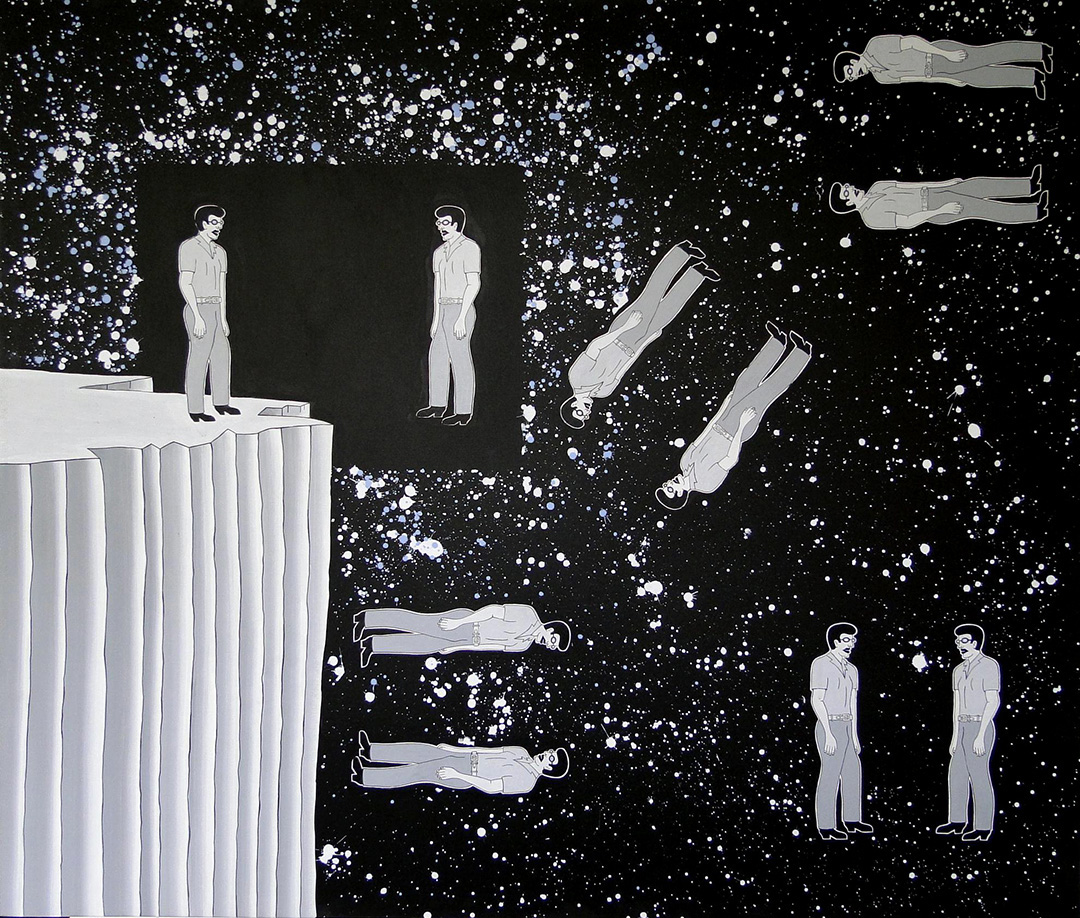
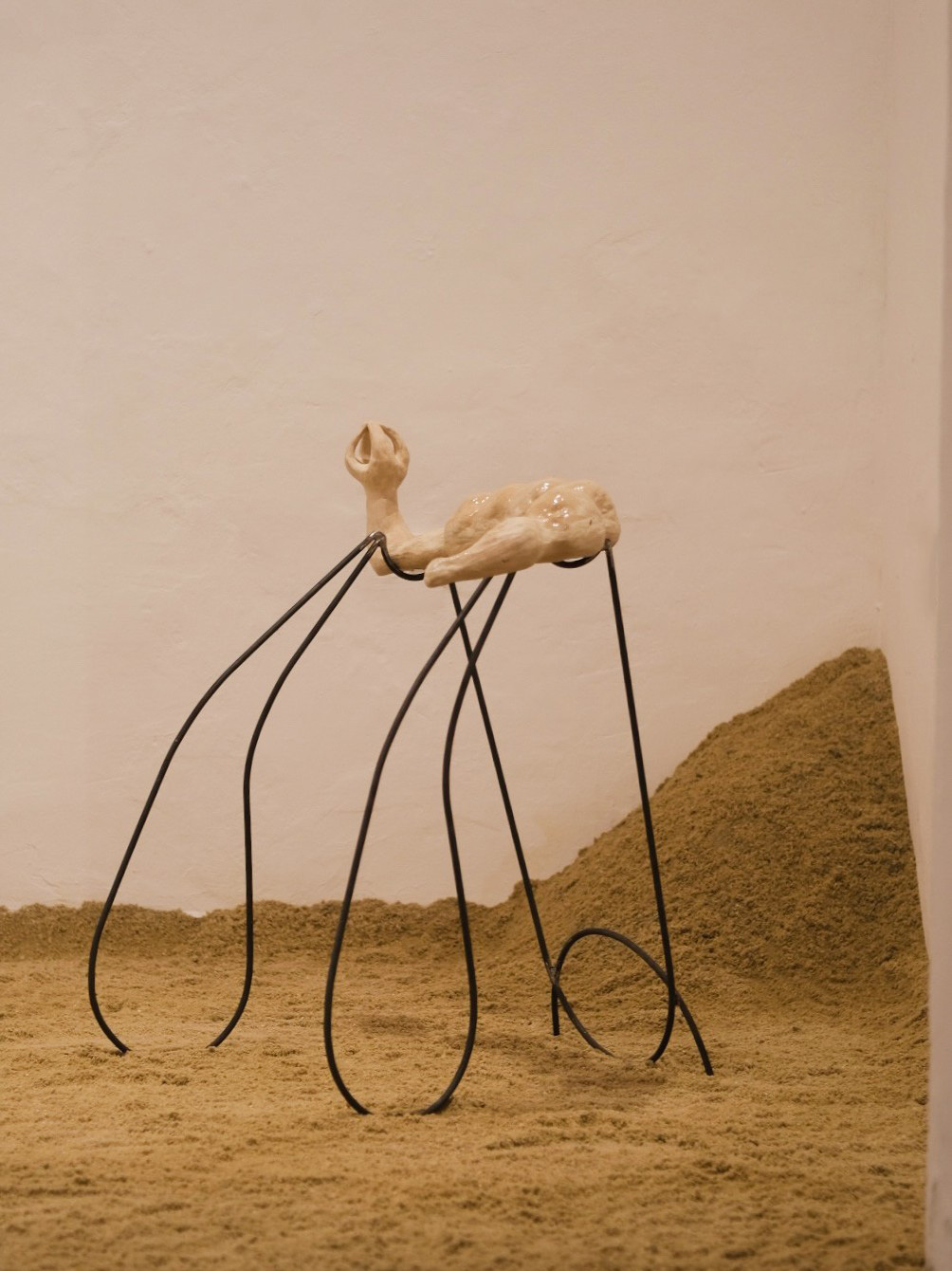
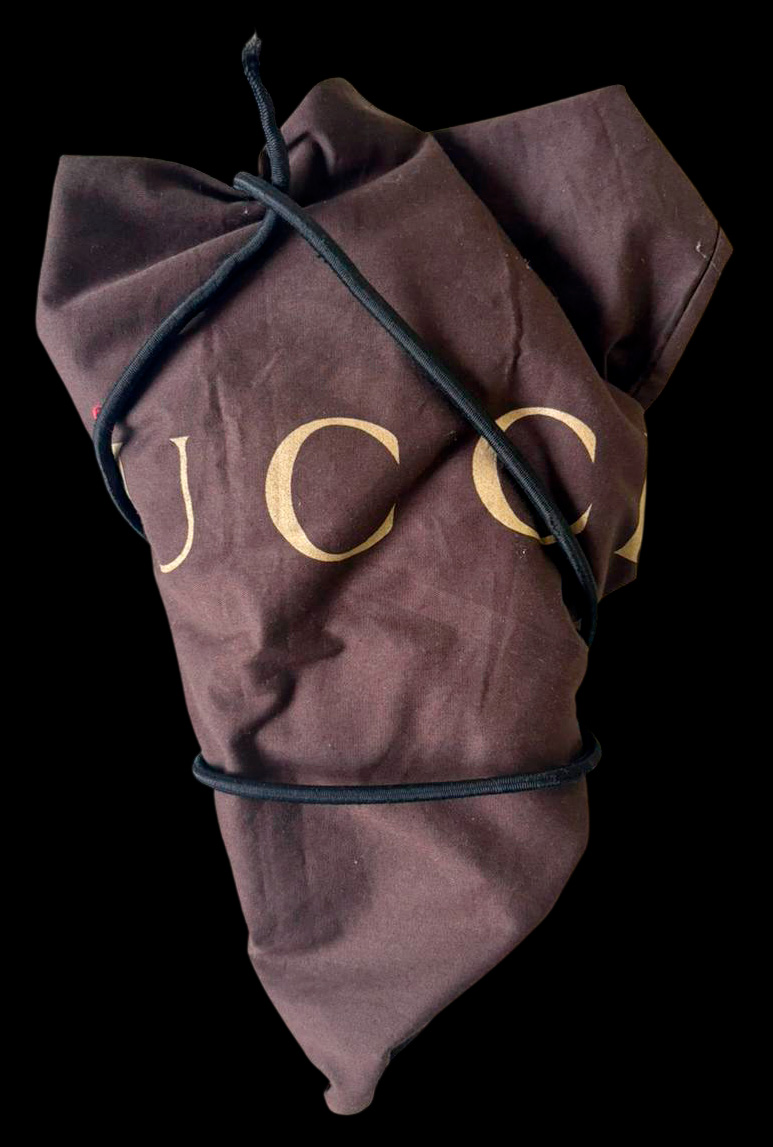
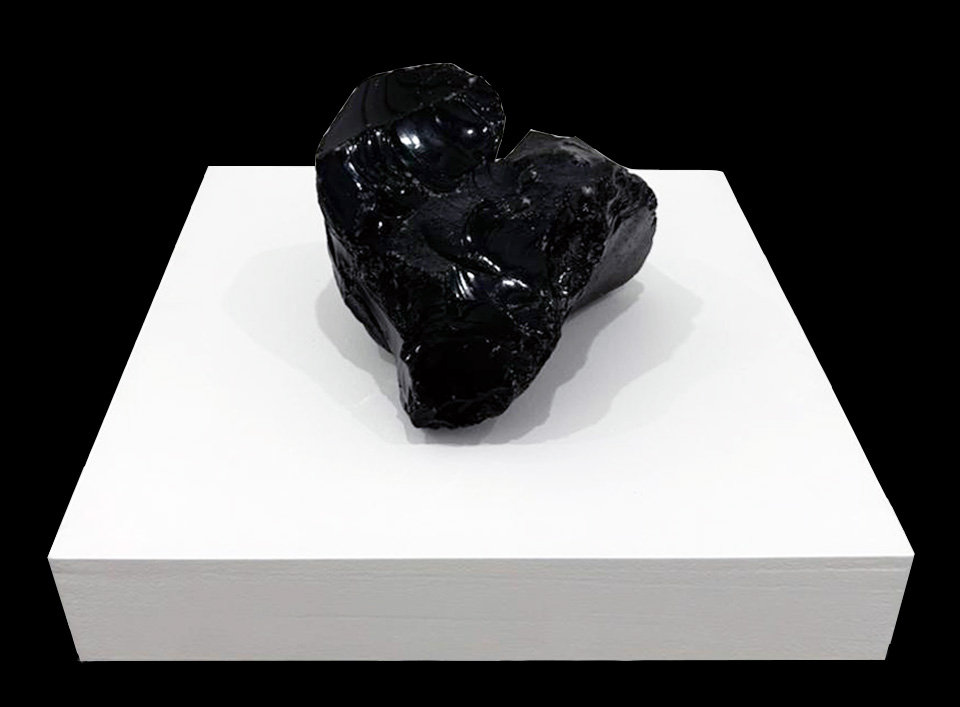
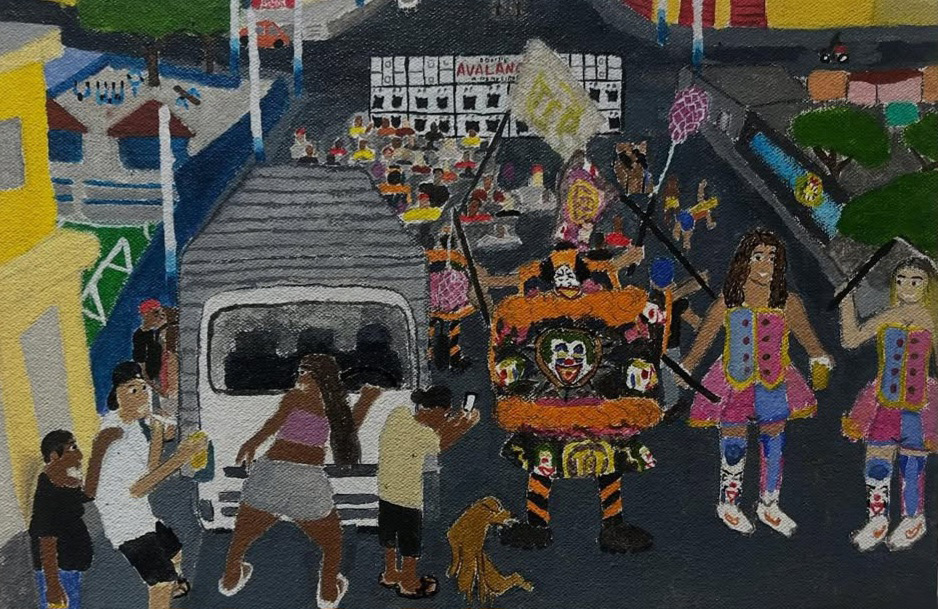
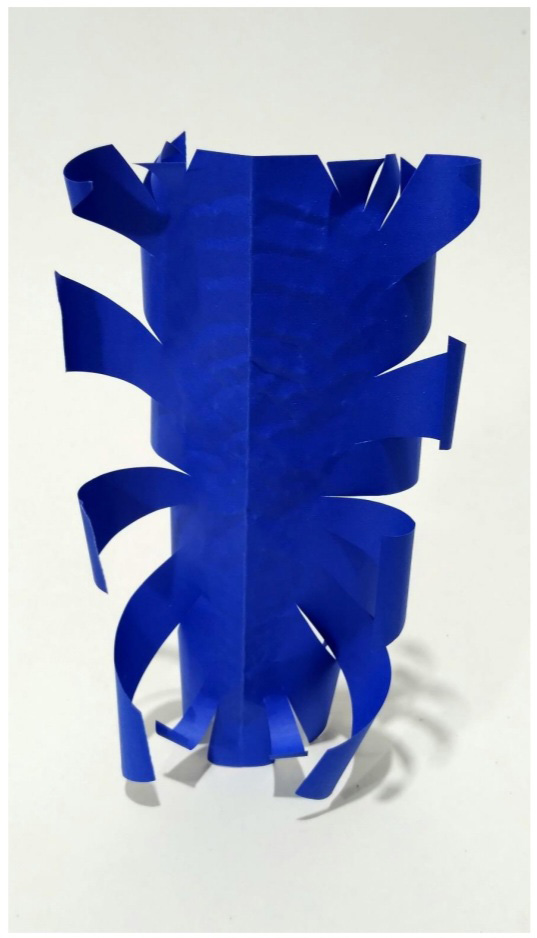
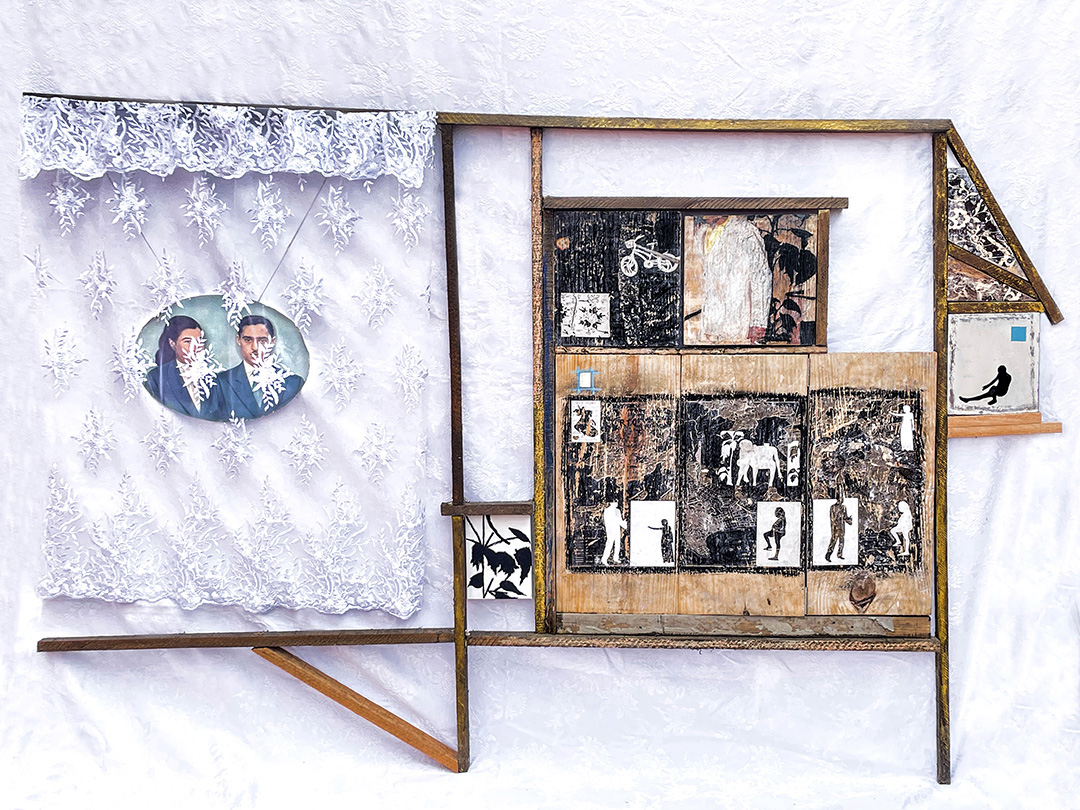
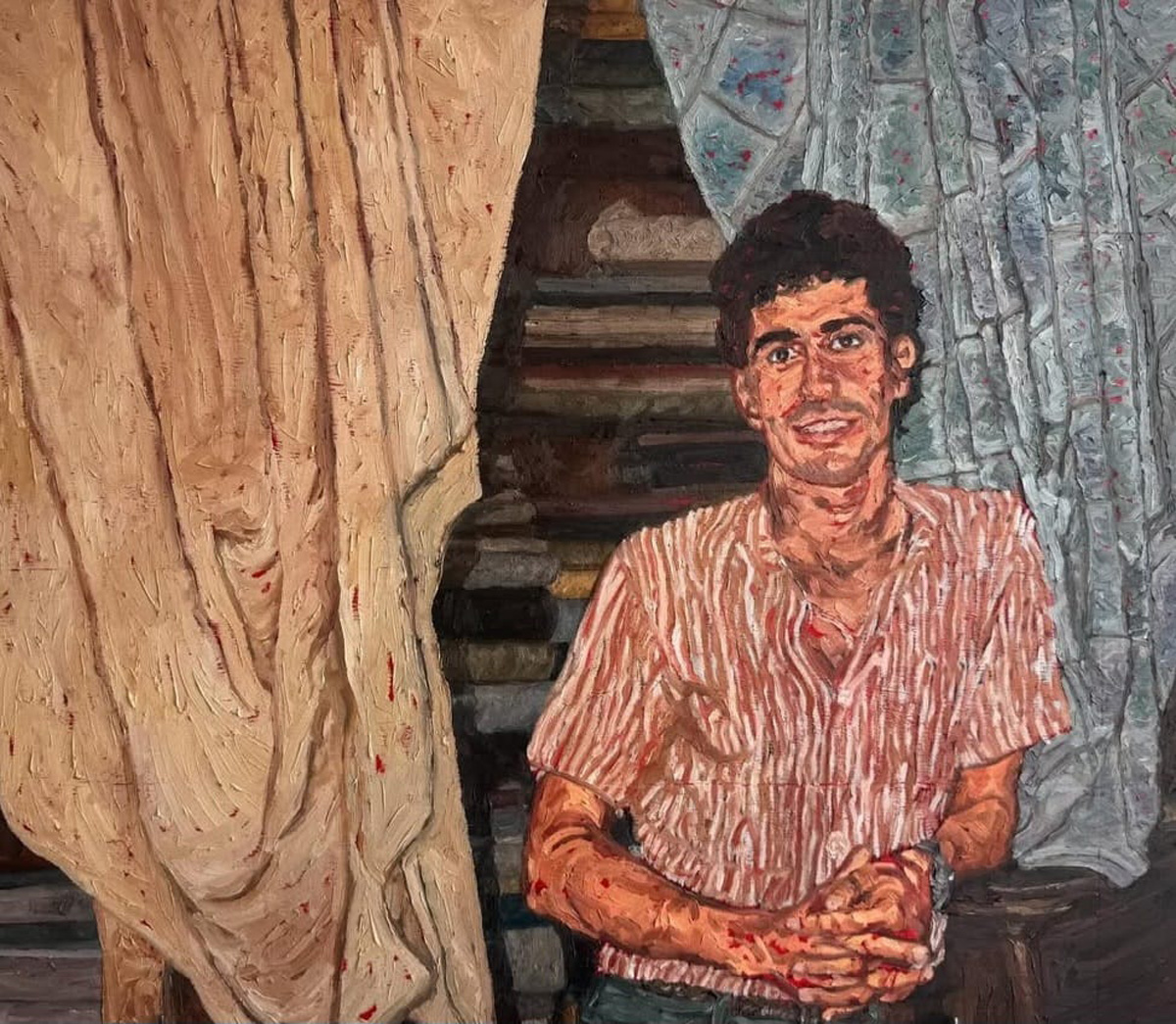
The Calmon-Stock collection, based in the city of Rio de Janeiro, is a collection of contemporary Brazilian art which gathers more than 180 artists and around 500 works covering paintings, sculptures, photographs, objects, video art and installations. Started in 2000 by collectors Roberto Calmon and André Stock, the collection covers the three first decades of the 21st century, maintaining as its guiding thread the unconditional attention to young contemporary artists, new galleries and political collectives. The collection, although of a private nature, is open to the institutions, having collaborated by lending to exhibitions at MAM Rio, Fundação Eva Klabin, ‘La Biennale di Venezia 2026 by Koyo Kouoh’ , Solar dos Abacaxis, Fundação Calouste Gubelkian Lisboa, Centro Cultural Banco do Brasil (RJ/SP/DF/MG) , Caixa Cultural Rio de Janeiro, Circuito Sesc Brasil, Centro Cultural dos Correios RJ, Museu da Língua Portuguesa SP, Centro Cultural Maria Antônia, Fundação Ecarta, ArtRio, Trienal das Artes de Sorocaba, among others.
In 2017, curated by Rio de Janeiro artists Omar Salomão and Fernando de La Rocque, the book “Bodies, Letters and Some Animals” was launched, which presented the history and an excerpt of the collectors’ choices. The fundamental objective was to make the artists in the collection visible at a time in the country when various democratic foundations, such as the Ministry of Culture – abolished during this period – and the freedom of artistic production were heavily patrolled. An edition of 500 copies, with the collaboration of Brazilian and foreign intellectuals such as Marcelo Backes, Nina Saroldi, Evangelina Seiler, Alexandre Ribenboim, Daniele Dal Col, Olav Velthuis, Markus Gabriel, Christoph Türcke and Diederich Diederichsen was distributed to artists, museums and galleries Brazil, but also in Germany, England, Spain, Holland, Canada, Chile and Argentina, with an extraordinary reception. Its online version was made available jointly.
In the book, curator Evangelina Seiler wrote: “the CalmonStock Collection is more than a collection, one could say that it is a residential curation based on the association of familiar objects and chosen works. Curious, thought-provoking and particular, the CalmonStock Collection shows two collectors who choose their works independently of external interests. The coherence of the set is established by the collectors and only by them.” This is true, but, adding a theoretical point of view to the issue of coherence, it is mainly Kantian aesthetics and its contemporary interpretations that appear to us as a guiding light in our discussions and choices, but also as theoretical keys for thinking about the collection. For in this environment are grouped the issues that interest us most: art, beauty, the work, politics, ethics, the possible meanings of the world and, more precisely, the political idea of art as a creator of new common meanings for us all.
In a country with a long colonial history like Brazil, it is essential to intertwine aesthetic and political issues. Our main criteria for selecting and acquiring works has always been to direct special attention to very young artists from a political perspective of fighting against the hegemony of already institutionalized cultural production. This hegemony prevents part of the creation and production of art from participating in narrative disputes and the sensitive sharing. Such criteria, we believe, enable the flourishing of a true multiplicity of world views, which is good for democracy. In this aspect, the treasure of our African and Indigenous aesthetic influences and of all our multicultural ancestries are like a path to a country that is green, yellow and blue, but also brown, black, red, turquoise, lilac, gold, olive and pink.
If there is a mission or vision for a private collection, it would be to look at the journey of artists, arts and works with their different ways of living, seeing and expressing the world. In this aspect – aware that we are aware of the very high criteria of art, art criticism and its history – we perceive a horizontality in our way of seeing it. Living with so many works, consecrated or not, and with so many different stories, is not only a privilege, but also a commitment to diversity and the promotion of equality. As collectors, who also move into other areas of knowledge, this seems to be a natural path for us. On this new website – which covers almost the entire CalmonStock collection – we share with pleasure and great joy a common path with our more than 300 collaborators!
collect
“We are covered with peels and representations which we build of ourselves.
And we usually try to make ourselves represented by things which are not our essence.
Therefore, it is important to search for the strip-tease of things in order to go beyond what is represented.
And to make the nakedness of ourselves face the nakedness of the world”.
Tunga
Collecting, a brief comment
Many friends and acquaintances ask us with curiosity what it is to be an Art Collector. It is a difficult question, to which there is no simple answer.We have decided to write this text in order to tell our experience of 25 years, and we hope to answer our friends’ demands and to incentivise art collecting.Most collectors become collectors with time… they buy a work, another one, and still another… as times goes by, they realise they have a collection in their hands, and start being recognised and named as a collector.
Love for art and curiosity for art grow with the collection: that is the way it happened to us.Two moments in our path were paradigmatic: the first one was when the works were catalogued by an insurance company. All the certificates of authenticity, photos, measurements, etc. were organised, creating a cohesive set: the whole seemed more than the sum of the elements. We realised things were getting serious. The second moment was when we had the opportunity to make an old dream come true, to visit Chilean Patagonia: arriving there, we were amazed by the beauty and the scale with which nature presented itself;
if Kant had known Patagonia, it is possible that his concept of “sublime” would have been influenced by that living cyclorama.The “end of the world” was very similar to many living paintings of Caspar David Friederich!
We realised that art was too important a thing in our lives: even there, far from the works we love, it compelled us and generated discussions during our strolls.
The habit of collecting involves a wide spectrum which goes from numismatics and bibliophily – perhaps the older ones – to the classical collections of stamps, cars, autographs, dolls, collections of travel souvenirs, trading cards, marbles, curious collections like taxidermy, shark teeth, sands of the world and even office clips. But what defines “art collection”? We believe collecting art is something special. It is not a simple activity. There are no associations of collectors or defined standards for collecting. The world of art is vast, and collectors need to have access to specific institutions: art galleries, fairs, ateliers, foundations, big and small museums, by and large, a series of places where art is made, thought, exhibited and also sold.
Collecting art is also special because our process of qualification (and pricing) of a work of art is extremely complex (very differently from coins, cars or stamps). Rilke, in his “Letters to a young poet”, speaks of something which he could also advise to collectors: “more unsayable than all other things are works of art, those mysterious existences, whose life endures beside our own small, transitory life”. For Rilke, “A work of art is good if it has arisen out of necessity. That is the only way one can judge it”. Rilke continues his lecture: “So, I can’t give you any advice but this: to go into yourself and see how deep the place is from which your life flows; at its source you will find the answer to, the question of whether you must create”. Then, one of the tasks of a collector is to think alongside the artist about the works, attempting to find a justification of its necessity. It is the exercise which Paul Valéry says :“what we call ‘work of art’ is the result of an action whose sole finite objective is to cause infinite developments in someone”. That is also a great definition which may serve a collector’s path: objects of art unfold infinitely.
About that unfolding, we can state that our greatest pleasure was to realise with time that private collections are an essential element of complementation of public and institutional spaces, and a fundamental element to the access to art. That happens as the collector, although having an individual view over their choices, and having curators to help them, will always be regarding the acquisitions in the middle of a constant dialogue and subjected to variations of taste of a large group which contains gallerists, artists, museologists, curators, institution directors, etc. Many times, the power of a collection lends the collector a voice to be heard by the world of art. The privilege that collectors have to deal with works in their houses brings the counterpart of commitment to art institutions through lending, donation, support to artists and their projects and creation of adequate spaces of exhibition.
Sharing the collection with countries of the African and Asian continent or Latin America is a dream of ours.
There is not one reason to be a collector, but many! The same way there is no single profile of collectors. Our existential worries, the place where we were born and where we live, the personal path which needed to be taken until one could enjoy high culture, all of that is implied in collecting. Art is a problem, an enigma which is set before us. The elitism of collecting is sublimated by the profound personal process (without intermediates) of necessary reflection and learning. No one can teach art: it is by its own nature enigmatic – learning comes with a metaphorical and technical approach, but does not lead anyone to its core.
Roberto Calmon e André Stock